

📝 Quantum Horizons: Security Risks and Investment Plays
The Quantum Risk–Reward Equation

For decades, cybersecurity in global supply chains relied on a simple formula: firewalls, RSA/ECC encryption, and trusted vendor networks.
But as digital ecosystems expand and quantum computing accelerates, this formula is crumbling. What was once a linear “supplier-to-customer” chain is now a hyper-connected web — and its security perimeter stretches across APIs, IoT sensors, and operational technology devices.
The result? A new frontier of systemic cyber risk, alongside a new frontier of investment opportunity.
🔹 1. Quantum Computing and the Security Time Bomb
The Threat
Traditional cryptography (RSA, ECC, Diffie-Hellman) relies on math problems that classical computers cannot solve efficiently. Quantum computers, powered by superposition and entanglement, can crack these problems in polynomial time.
The danger isn’t futuristic: “Harvest Now, Decrypt Later” (HNDL) attacks are already happening. Malicious actors intercept today’s encrypted data, storing it until “Q-Day” (when quantum computers become cryptographically relevant, expected as early as 2035).
The Implication
Sensitive data transmitted today — government secrets, financial records, medical files — may be decrypted retroactively. Compliance mandates like GDPR and HIPAA (which require long-term data retention) become a double-edged sword, inadvertently creating a time bomb for enterprises. Risk management shifts from an IT issue to a board-level governance crisis.

🔹 2. Post-Quantum Cryptography (PQC): The Countermove
The emergence of post-quantum cryptography (PQC) represents the most practical and immediate countermeasure to the quantum threat. Unlike quantum key distribution (QKD), which requires specialised hardware, PQC algorithms are designed to run on classical computers, offering resistance to both classical and quantum attacks. This scalability makes PQC uniquely positioned to become the backbone of the next generation of digital trust.
The standardisation process led by the U.S. National Institute of Standards and Technology (NIST) has been pivotal. Since its launch in 2016, the process has involved global collaboration, rigorous peer review, and multi-stage elimination of weaker proposals. The finalisation in 2024 provided the catalyst for widespread adoption: governments have begun to mandate PQC integration, major technology vendors like Microsoft and Google are embedding PQC into their products, and enterprises are being forced to align or risk exposure. In effect, NIST’s seal of approval has acted as the domino that set the global migration in motion.
Yet, significant bottlenecks remain. IoT and operational technology (OT) devices pose the greatest challenge due to their 10–20 year lifecycles, limited computational resources, and frequent lack of updatability. This creates a bifurcated adoption curve: new “greenfield” deployments can integrate PQC from the outset, while legacy “brownfield” infrastructure may require costly retrofitting or full replacement. For many companies, this reality means PQC adoption will be a long-term capital planning exercise, rather than a quick technical patch.
🔹 3. The Investment Angle: Betting on Quantum
The arms race in quantum computing isn’t just about science — it’s an equity story with lottery-ticket potential. Three listed players highlight the spectrum of approaches:
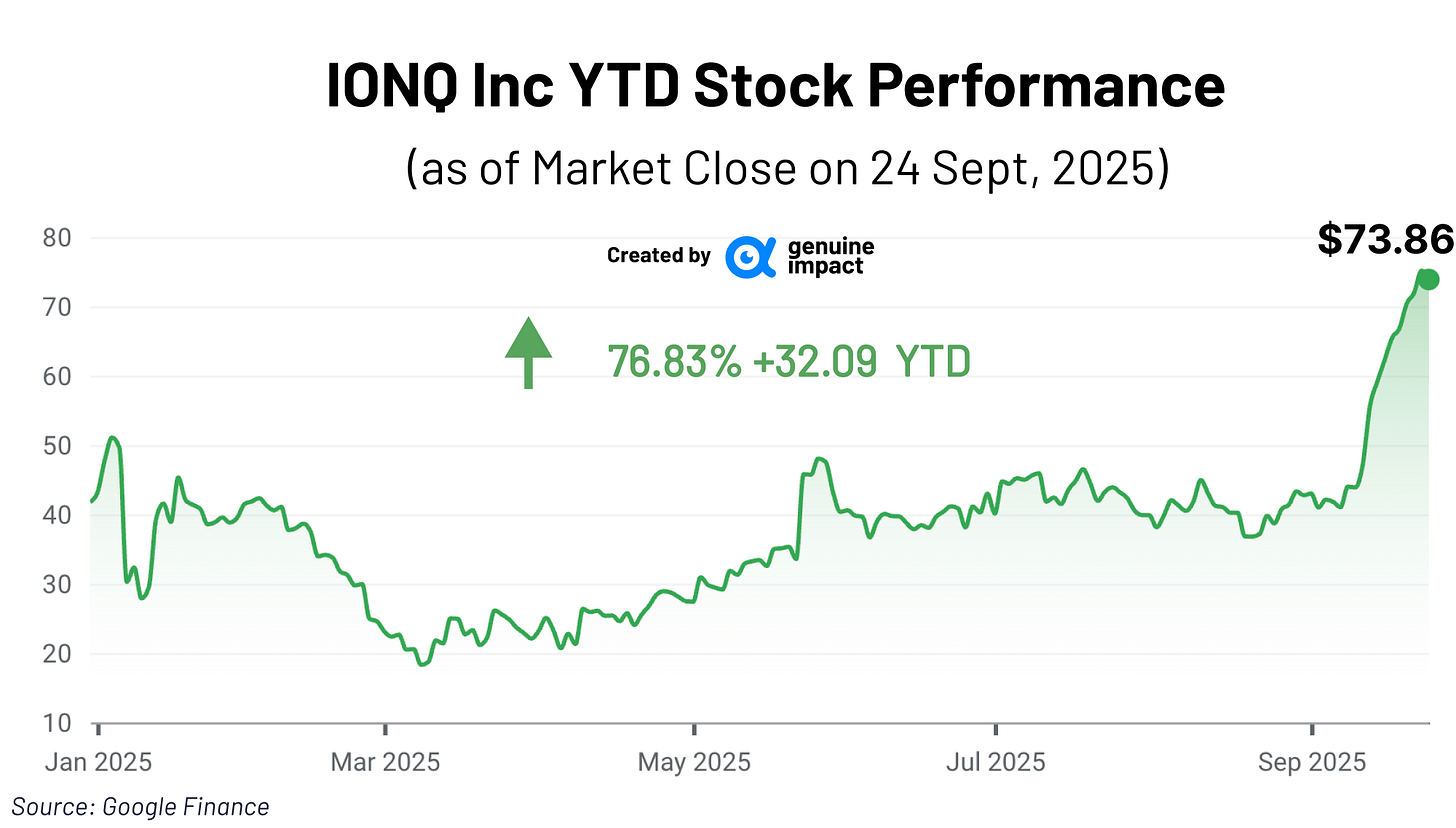
IonQ (NYSE: IONQ)
Pioneer of trapped ion technology, operating at room temperature (no need for costly cooling).
Holds records in computational accuracy — the holy grail of quantum.
Advantage: lower commercialisation costs, high fidelity. Risk: speed disadvantage.
D-Wave Quantum (NYSE: QBTS)
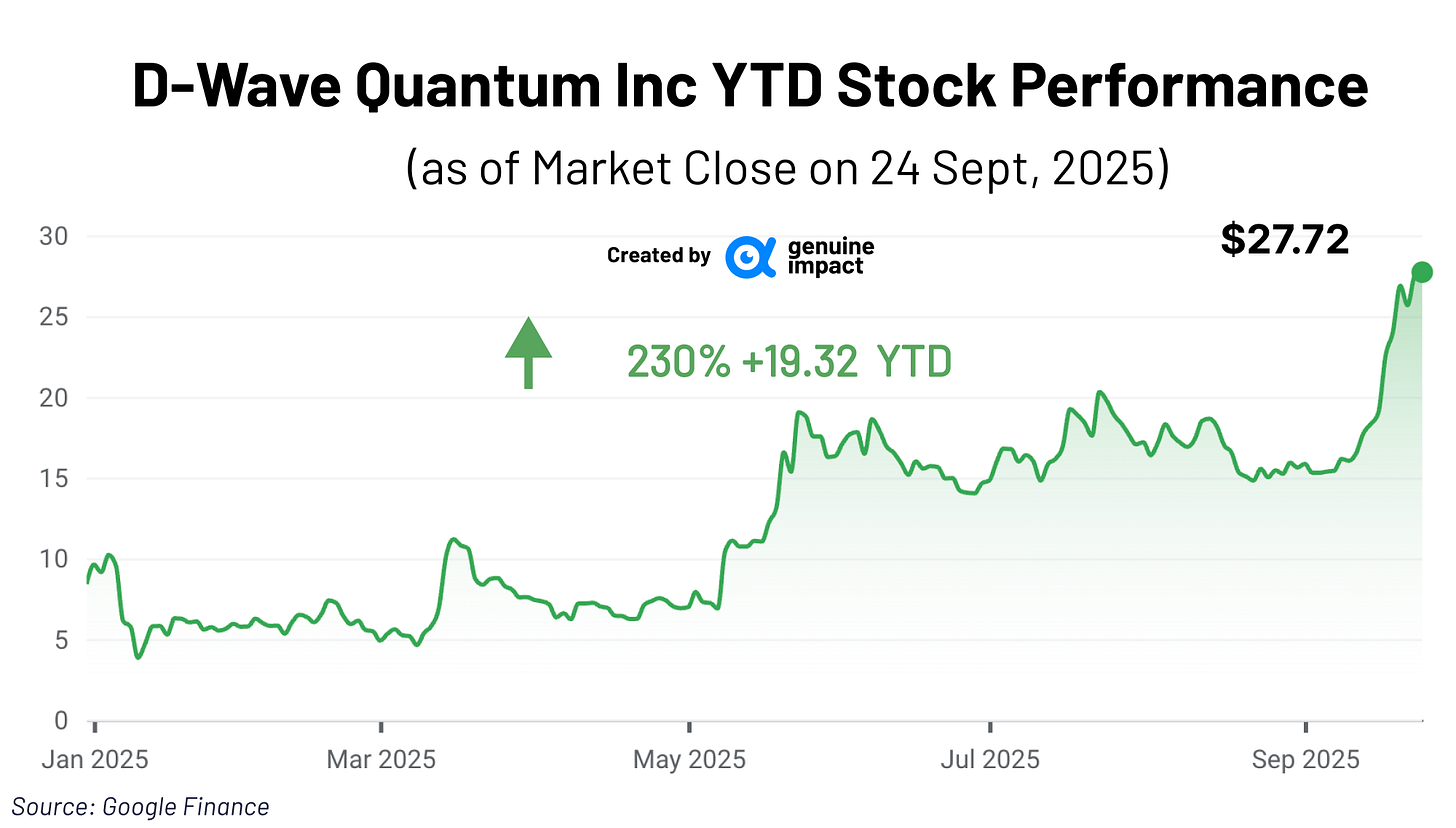
Uses quantum annealing, optimised for logistics and statistical sampling.
Not a general-purpose machine, but highly relevant for supply chain optimisation.
Advantage: focused solutions with clear commercial use. Risk: narrow scope.
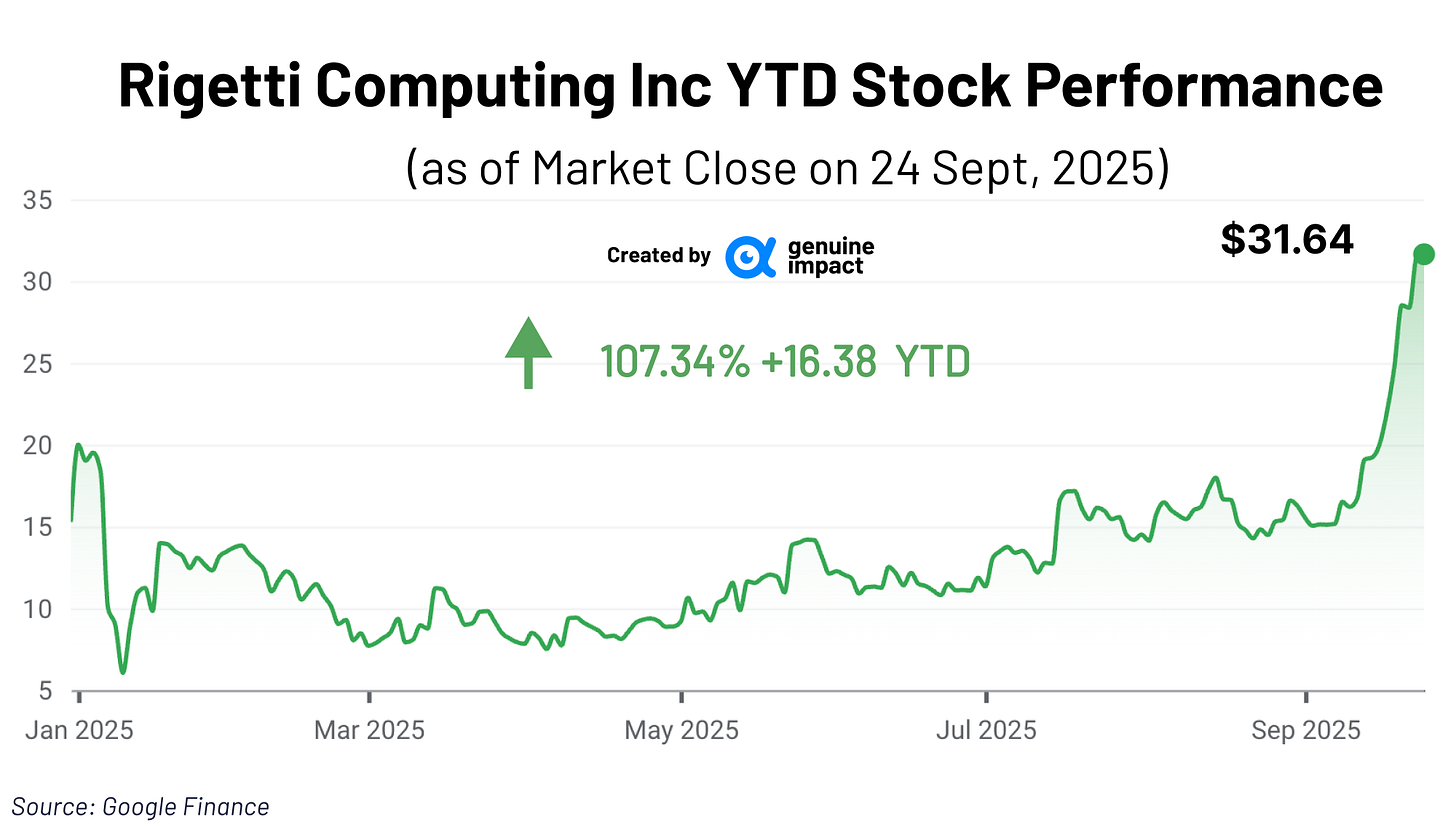
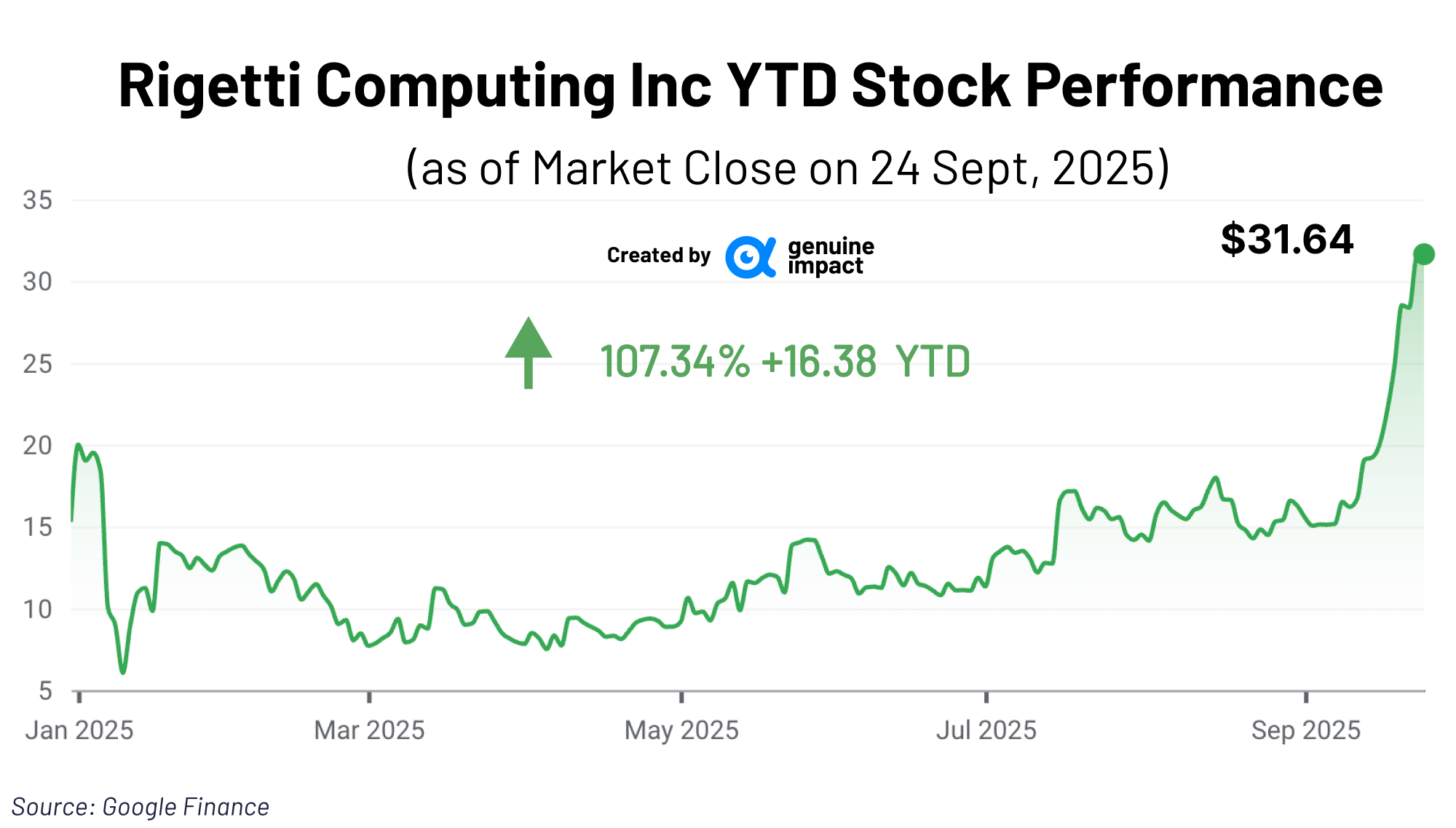
Rigetti Computing (NASDAQ: RGTI)
Competing in superconducting quantum computing — the same arena as Google and IBM.
Already selling a multi-chip 36-qubit machine, with claims of 1,000x faster gate speeds than IonQ.
Advantage: speed. Risk: crowded field with Big Tech dominance.
📊 Market Dynamics: Parallel to the AI Wave
The trajectory of quantum computing equities bears striking resemblance to the early stages of artificial intelligence. Just as AI catalysed trillion-dollar valuations in companies like Nvidia, Palantir, and AMD, quantum computing may give rise to the next generation of “moonshots.”
However, the probability distribution is inherently asymmetric: a few outsized winners will emerge, but many firms will falter or disappear entirely.
This barbell-shaped risk profile makes diversification essential. Concentrated bets in a single player could deliver exponential returns — or result in total loss. As such, exchange-traded funds (ETFs) dedicated to quantum computing, such as the Defiance Quantum ETF, offer a more balanced entry point. While these vehicles may not deliver the extreme upside of a single-stock success story, they provide investors with broad exposure to the sector’s growth while mitigating the risk of individual collapse.
🔹 4. The Takeaway
For enterprises: Zero-trust architectures + PQC migration are no longer optional. The supply chain is the new perimeter, and quantum risk must be treated as a governance issue, not just IT.
For investors: Quantum computing stocks are speculative but asymmetric bets. IonQ, D-Wave, and Rigetti each represent different technology paths, with high upside but equally high risk. A basket approach — or ETF allocation — balances exposure.
🚀 At Genuine Impact, we see quantum + cybersecurity as the next thematic overlap between technology risk and equity opportunity. The winners will be those who:
Secure the digital ecosystem with PQC.
Identify scalable, commercially viable quantum architectures.
Manage portfolio risk while positioning for exponential upside.
Keep in touch with Genuine Impact!
Instagram | X/Twitter | LinkedIn
Created by Arya